

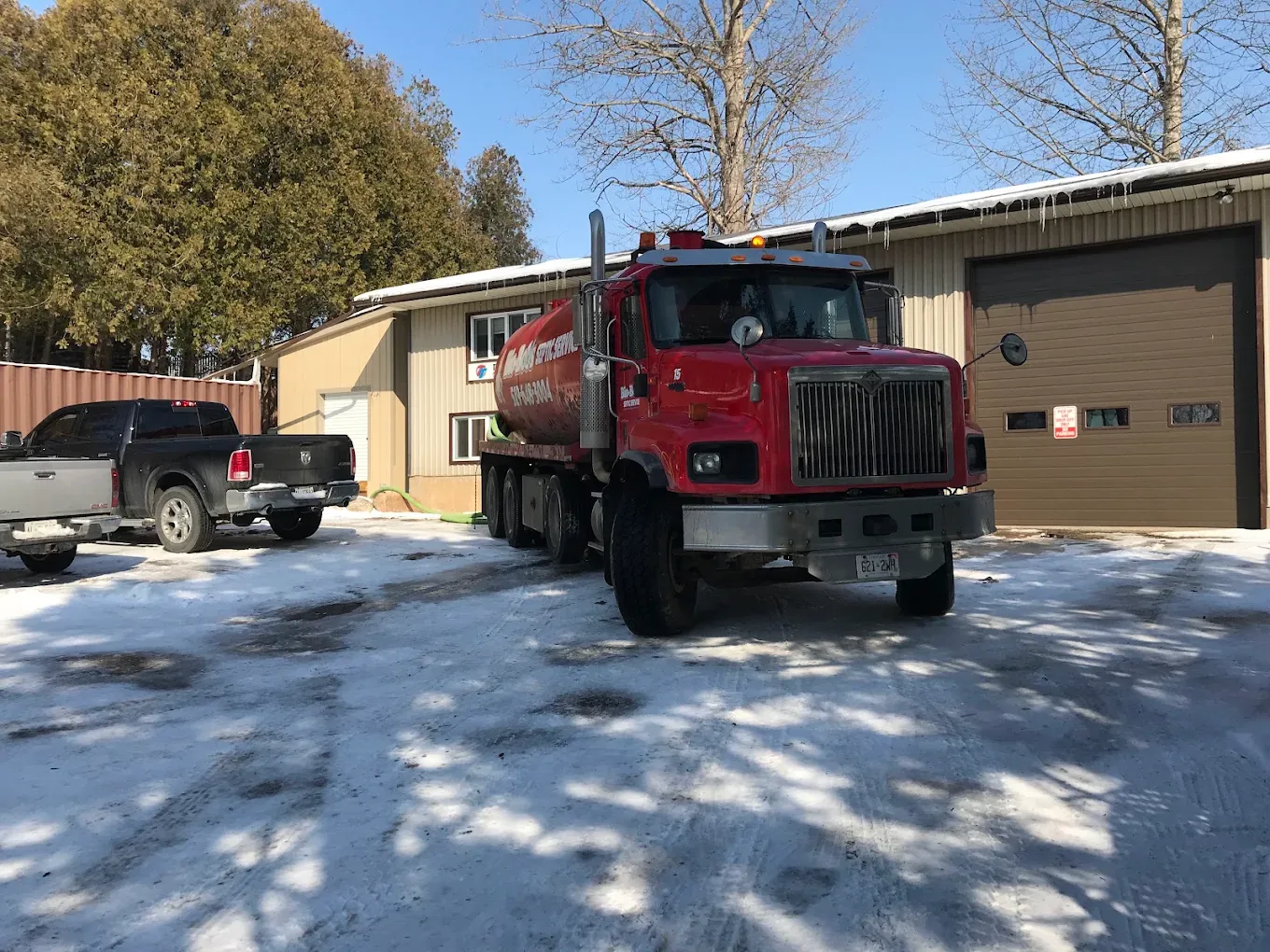
Septic service questions answered by our team
Over two generations of hands-on septic experience inform every answer below. Whether you’re scheduling your first pump-out or troubleshooting a slow drain, you’ll find practical guidance here.
Common questions from property owners we serve
Why should I have my septic tank pumped out regularly?
Every flush, shower, and load of laundry sends solids into your septic tank. Over time, sludge accumulates on the bottom while a scum layer forms on top. If that sludge isn’t removed, it migrates into the weeping bed (also called the leaching field), where it clogs soil pores and blocks liquid absorption. A clogged weeping bed can cost several thousand dollars to excavate and replace. Routine Septic Tank Pumping every two to three years keeps sludge levels low, protects the weeping bed, and extends the overall life of your system. A single pump-out is a fraction of the cost of a full field replacement, making it one of the most cost-effective maintenance steps a property owner can take.
How often does a septic tank need to be pumped?
Most residential tanks should be pumped every two to three years. However, the right interval depends on your tank size, the number of people in your household, and your daily water usage. A family of five using a standard 3,600-litre tank will fill it faster than a couple in the same home. During every Septic System Inspection, our technicians measure the sludge and scum layers and recommend a schedule tailored to your actual usage, so you’re never guessing.
What are the warning signs that my septic system is failing?
One of the most common mistakes property owners make is dismissing early symptoms as minor plumbing issues. Slow-draining sinks, gurgling pipes, sewage odours near the tank or weeping bed, and unusually green or spongy patches of grass above the field are all indicators that your system needs attention. Ignoring these signs often leads to a full weeping bed failure, which is far more disruptive and expensive than a scheduled pump-out. If you notice any of these symptoms, calling promptly for an inspection can prevent a small issue from becoming a major repair.
What should I avoid putting into my septic system?
Your septic tank relies on active bacteria to break down organic waste. Products that kill those bacteria, such as bleach, caustic drain cleaners, and antibacterial soaps used in large quantities, compromise the decomposition process. Physical items like diapers, feminine products, baby wipes (even those labelled septic safe), cigarette butts, and cotton swabs cause blockages in pipes and baffles. Paint solvents, nail polish removers, oils, and polishes should never enter the system. Keeping these materials out protects both the tank and the downstream weeping bed.
How do I find my septic tank on my property?
Most septic tanks are located 5 to 15 feet from the home, directly in line with the main sewage outlet pipe that exits through the basement wall. Tanks are typically buried 12 to 60 inches below grade. About 95 percent of tanks have two cleanout access ports at either end, spaced roughly 6 to 8 feet apart. If your tank has never had a riser installed, locating it can involve probing the soil. We offer Electronic Locating of Septic Tanks, which pinpoints the tank without unnecessary digging and saves time on your service call.
I’m buying a home with a septic system. What should I know?
Before closing on any property with a septic system, have the tank pumped and the entire system inspected. Septic problems that go undetected during a purchase can result in repair bills of several thousand dollars. Our Septic System Inspections include pumping both chambers, checking inlet and outlet baffles, assessing tank condition, and examining the weeping bed for visible signs of failure. We’ve been a vetted and recommended vendor by Go Wylde Real Estate and the Nick FitzGibbon Real Estate Team, and we provide a clear written report you can share with your real estate lawyer.
What happens during a typical septic service call?
Our radio-dispatched crew arrives at your property, locates the tank access ports, and pumps out both the primary and secondary chambers. While the tank is empty, the technician inspects the inlet and outlet baffles for damage or blockage, checks the interior walls for cracks or deterioration, and examines the weeping bed for surface pooling or odour. You’ll receive a verbal summary on site and a recommendation for your next pump-out interval. If Baffle Inspection and Repairs or Riser Installations and Quoting are needed, we discuss options and pricing before any additional work begins.
What is Bio-Clean and how does it help my septic system?
Bio-Clean is an NSF Certified blend of natural bacteria and enzymes that breaks down organic waste such as protein, grease, and fibre inside your pipes and septic tank. It converts these materials into water, carbon dioxide, and mineral ash without introducing harsh chemicals. Regular Bio-Clean treatments help maintain healthy bacterial levels in your tank between pump-outs, reducing sludge buildup and extending the interval between service calls. As a Distributor of Bio-Clean®, we can supply and advise on the correct dosage for your system size.
Do you service catch basins and water reservoirs?
Yes. Our Catch Basin Cleaning and Flushing service uses pressure-washer equipped vacuum tankers to blast away sand, debris, and blockages from catch basin lines, restoring proper drainage in parking lots, condominium complexes, and commercial properties. For Drinking-Water Reservoir Cleaning and Sanitizing, we use dedicated tanker equipment that is never exposed to sewage. Hoses, connections, and the tanker interior are sanitized before every water reservoir project, and our operators are professionally trained and certified in confined space entry techniques. These protocols protect drinking water from cross-contamination.
How much does a septic tank pump-out cost?
Residential pump-out pricing depends on tank size, depth to the access lid, and site accessibility. We provide a clear quote before work begins so there are no surprises. Scheduling regular pump-outs every two to three years is significantly less expensive than the emergency excavation and field replacement that results from neglected maintenance. If you’d like a quote for your property, reach out to our team by phone at 519-648-3004 or toll-free at 1-888-405-POOP (7667), and we’ll walk you through what to expect.
Regular maintenance costs less than emergency repairs
A scheduled pump-out every two to three years is the single most effective way to protect your weeping bed and avoid costly system failure. Bio-Bob’s Septic Service has been helping property owners across Kitchener-Waterloo, Cambridge, and Guelph make that smart decision since 1996. Call us to schedule your next service.
Thanks, we’ve got it.
Our team will be in touch on the next business day.